Wisdom Teeth Removal Oxnard CA: Understanding Surgical and Non-Surgical Cases
Wisdom teeth have a way of turning a quiet, healthy mouth into a sudden problem. One week, a patient feels nothing. The next, there is pressure behind the molars, a gum flap that catches food, or a deep ache that seems to radiate into the ear and jaw. In a coastal community like Oxnard, where many people juggle work, school, family schedules, and outdoor activities year-round, dental problems that interfere with eating or sleeping rarely stay minor for long.
When people search for Wisdom Teeth Removal Oxnard CA, they are usually trying to answer one practical question: do I need a simple extraction, or am I heading toward oral surgery? The distinction matters. It affects how the tooth is evaluated, what the procedure involves, how long recovery may take, and what kind of planning makes sense before treatment.
The short version is this: some wisdom teeth can be removed in a fairly straightforward, non-surgical way, while others require a surgical approach because of how they sit in the bone, how they erupt, or how close they lie to nearby structures. The right treatment depends less on age alone and more on anatomy, symptoms, and timing.
Why wisdom teeth become a problem
Wisdom teeth are the third molars, the last teeth to develop and usually the last to emerge. Many adults have up to four, though some develop fewer and some never develop them at all. Trouble starts because the jaw often does not have enough room to accommodate these teeth in a useful, healthy position.
In practice, there are several patterns dentists and oral surgeons see over and over. A wisdom tooth may erupt only partway through the gum, leaving a pocket where bacteria and food debris collect. It may tilt forward into the second molar, press sideways, or remain trapped fully under bone and gum. Even when a wisdom tooth does erupt, it may emerge so far back that keeping it clean becomes difficult. That creates a quiet but persistent risk of decay, gum infection, and damage to the neighboring molar.
Patients are often surprised that a wisdom tooth can cause problems without dramatic pain. Some cases show up on X-rays before symptoms start. Others are discovered because the second molar develops a cavity or localized bone loss next to a poorly positioned third molar. That is one reason early evaluation matters. It gives a clinician a chance to compare what is happening today with what is likely to happen in the next few years.
The difference between non-surgical and surgical removal
The phrase "wisdom teeth removal" covers two very different types of procedures.
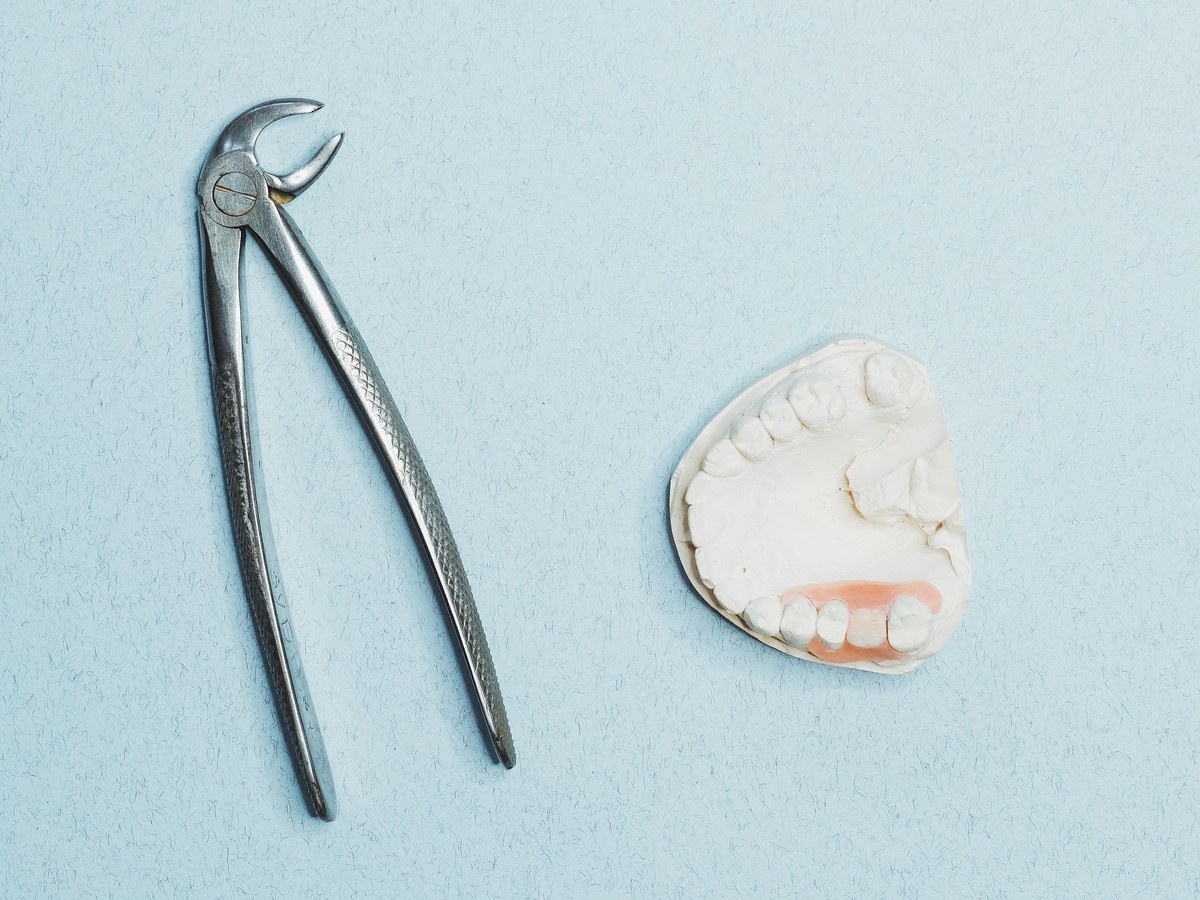
A non-surgical extraction is usually possible when the wisdom tooth has fully erupted into the mouth, is accessible above the gumline, and can be loosened and removed with standard instruments. In these cases, the dentist can grip the tooth, gently expand the surrounding socket, and remove it without making an incision in the gum or removing bone. These extractions can still require careful technique, especially if the roots are curved or the tooth is brittle, but the procedure is more like a conventional tooth extraction than an oral surgery case.
A surgical extraction is needed when the tooth is partially erupted, trapped beneath the gums, covered by bone, angled in a difficult direction, or too fragile or inaccessible to remove in one piece. Surgical removal often involves lifting the gum tissue, removing a small amount of surrounding bone, and sometimes sectioning the tooth into smaller pieces before taking it out. Stitches may be placed afterward to support healing.
That difference sounds simple on paper, but clinically it changes the entire appointment. Surgical cases require more planning, different instruments, and more detailed imaging. Recovery is also more variable, because the tissues have been manipulated more extensively.
What determines which kind of procedure you need
No responsible clinician decides between surgical and non-surgical removal by looking quickly inside the mouth alone. The tooth's visible portion tells only part of the story. X-rays, and in some complex cases 3D imaging, show the real relationship between the tooth, its roots, the bone, and nearby nerves or sinus structures.
The upper wisdom teeth and lower wisdom teeth each bring their own concerns. Upper thirds can sit close to the sinus. Lower thirds can be near the inferior alveolar nerve, which supplies feeling to the lower lip and chin. Most extractions do not cause nerve injury, but risk assessment is a standard and important part of planning lower wisdom tooth surgery.
Several factors push a case toward surgical removal:
- the tooth is impacted under gum or bone
- the tooth is only partially erupted
- the roots are shaped or positioned in a way that limits direct removal
- the tooth is pressing against the second molar
- there is not enough access to remove it safely with a routine extraction
Age can matter too. Younger patients often heal more predictably, and the bone around the roots may be less dense. By the late twenties or later, roots are usually fully formed and the surrounding bone can be less forgiving. That does not mean older adults cannot have wisdom teeth removed successfully. It simply means the procedure and recovery may require more nuance.
Cases that often qualify as non-surgical removal
Non-surgical wisdom tooth removal tends to be less dramatic than many people imagine. A fully erupted upper wisdom tooth, for example, may sometimes come out faster than a badly broken first molar. If the tooth is in the mouth, visible, cleanly accessible, and not fused to the bone, a routine extraction may be the best path.
This is often the case for patients who had enough jaw space for the wisdom teeth to erupt, but the teeth later developed decay or gum disease because they were hard to clean properly. It is also common when a tooth has over-erupted because it lacks a stable biting partner. In those situations, the question is less about impaction and more about whether the tooth still adds value to the bite.
That said, "non-surgical" does not mean trivial. Third molars are far back in the mouth. The cheek, the angle of the jaw, and limited opening can make even a straightforward case awkward. The clinician still has to control force carefully to protect the surrounding https://maps.app.goo.gl/3J3yp5fz8ZfBkuVj9 bone and neighboring tooth. Patients also still need anesthesia, and in some cases sedation is discussed even for simpler extractions, especially if anxiety is high or multiple teeth are being removed at once.
Cases that usually require surgery
Surgical cases are the ones people typically picture when they think about wisdom teeth. The classic example is a lower wisdom tooth that lies sideways and pushes against the second molar. Another common pattern is a partially erupted lower third molar covered by a gum flap, which traps food and bacteria and causes recurrent inflammation known as pericoronitis. Patients often describe this as swelling at the back of the jaw, tenderness when chewing, bad taste, and trouble opening wide.
Fully impacted teeth can be quieter, but not necessarily harmless. A tooth that stays buried may still form a cyst, contribute to crowding in the back, or damage the roots of the second molar in certain cases. Not every impacted wisdom tooth must come out immediately, but every impacted wisdom tooth should be evaluated in context.
Surgery is also common when the visible portion of the tooth is too compromised to remove as a single unit. A tooth with large decay, brittle enamel, or unusual root anatomy may fracture during extraction. In that setting, sectioning the tooth on purpose is often safer than trying to force it out intact.
One point patients appreciate hearing clearly is that surgery is not a sign of failure or severity by itself. It often reflects anatomy, not emergency. A planned surgical extraction in a controlled setting is routine care in oral surgery and common in general dental practices that manage these cases regularly.
How the evaluation usually unfolds
A proper consultation is not just a recommendation to "take them out." It is a risk-benefit discussion. Symptoms matter, but so do the findings on the images and the patient's age, health history, schedule, pain tolerance, and goals.
A teenager with impacted lower wisdom teeth but no symptoms may still be advised to remove them before root development progresses further or before the second molars are affected. A healthy adult in their thirties with an erupted upper wisdom tooth causing repeated decay may need only a simple extraction. An adult with fully impacted, symptom-free wisdom teeth that have remained stable for years may be a candidate for continued monitoring rather than immediate surgery. Good care is not about pushing every patient toward the same answer.
When patients seek Wisdom Teeth Removal Oxnard CA, local factors shape the conversation too. Students may want treatment scheduled around school breaks. Agricultural and service workers often ask when they can return to physically demanding jobs. Parents of teenagers may want all four removed in one visit to limit missed school and repeat appointments. These are practical considerations, and they influence how treatment is planned, especially when sedation is being considered.
Sedation, anesthesia, and what patients can expect
The level of anesthesia depends on the complexity of the case, the number of teeth involved, and patient comfort. Some non-surgical extractions are managed comfortably with local anesthesia alone. For surgical cases, local anesthesia remains essential, but sedation may be added to reduce awareness and anxiety.
There is no single best option for everyone. One patient with a high pain threshold and low anxiety may do well fully awake with local anesthetic. Another may prefer nitrous oxide or oral sedation for a less stressful experience. More complex cases, especially removal of multiple impacted teeth, are often paired with deeper sedation. The decision should balance safety, medical history, logistics, and patient preference.
It also helps to set expectations honestly. After a routine erupted wisdom tooth extraction, many people are back to desk work quickly, sometimes the next day if swelling is minimal. After surgical removal of impacted lower wisdom teeth, swelling commonly peaks around the second or third day. Jaw stiffness is normal. Soft foods, careful rinsing, and a lighter schedule are often wise for several days.
The recovery difference between simple and surgical cases
Patients often focus heavily on the day of the procedure, but recovery is where the distinction between non-surgical and surgical really shows up.
With a non-surgical extraction, soreness is usually more localized. Bleeding often settles relatively quickly, and the tissues may calm down within a few days. There can still be discomfort, especially if the roots were long or the socket was tight, but function tends to return sooner.
With a surgical extraction, there is more tissue trauma by definition. The gum may have been reflected, bone may have been removed, and the tooth may have been sectioned. Swelling and bruising are more common. The jaw can feel tired, particularly after lower third molar surgery. Some patients describe a dull, deep ache that is different from a toothache. That pattern is expected, but it should improve gradually.
Dry socket is one of the better-known complications, especially after lower wisdom tooth removal. It occurs when the early clot in the socket is lost or fails to protect the bone properly, leading to significant pain several days after the extraction. It is not the most common outcome, but it is common enough that every patient should know the warning signs. Smokers and patients who create too much suction in the early healing period tend to face higher risk.
A few aftercare habits make a meaningful difference:
- keep pressure on the gauze as directed right after the procedure
- stick to soft, non-irritating foods for the first phase of healing
- avoid smoking, straws, and forceful rinsing early on
- use medications exactly as prescribed or recommended
- call promptly if pain worsens sharply after initial improvement
These basics sound simple, but they prevent many avoidable setbacks.
When leaving wisdom teeth alone makes sense
The conversation about third molars is sometimes framed too aggressively, as if every wisdom tooth is a future emergency. That is not accurate. Some wisdom teeth are healthy, fully erupted, cleanable, and aligned well enough to function. Others are impacted but remain stable for years without damaging nearby structures. Observation can be appropriate if the tooth is not causing disease and imaging does not show a developing problem.
The catch is that observation is not neglect. It means periodic exams and imaging as recommended. It means recognizing that circumstances can change. A tooth that looked benign at age nineteen may become problematic at twenty-six if it starts trapping food, decays, or contributes to gum breakdown around the second molar.
This is where judgment matters more than slogans. Preventive removal has advantages in some cases, especially for impacted teeth likely to create trouble and easier to remove earlier in life. Conservative monitoring also has advantages in selected cases, particularly when surgery carries added risk and the tooth has remained quiet. Good clinicians explain both sides instead of treating one approach as universal.
Signs that should not be ignored
Many wisdom tooth problems announce themselves gradually. Patients often dismiss early symptoms because they come and go. That can be a mistake, especially when infection is involved.
Pain at the back of the jaw, swelling in the gum behind the second molar, a bad taste, food getting trapped repeatedly, and difficulty opening the mouth all deserve attention. So does tenderness that seems to flare every few months, then disappear. Recurrent symptoms usually point to a structural problem that has not resolved.
Sometimes the issue shows up in less obvious ways. A patient may complain of biting the swollen tissue behind the last molar. Another may notice persistent bad breath despite good brushing. A parent may bring in a teenager for braces follow-up, only to learn from the X-ray that lower wisdom teeth are angling into the roots of the second molars. These are not rare stories. They are everyday reasons for third molar evaluation.
Practical questions patients ask most often
One of the first questions is whether all four wisdom teeth have to come out at once. Not necessarily. If only one or two are problematic, treatment can be limited to those teeth. On the other hand, if several are clearly headed toward trouble and the patient wants one recovery period instead of multiple appointments, removing them together may be sensible.
Another common question is whether wisdom teeth cause front tooth crowding. The relationship is not as direct as many people were once told. Lower front crowding can happen for several reasons over time, and wisdom teeth are not the sole culprit. They can create pressure and local problems in the back, but crowding decisions should be based on the full orthodontic picture, not a simple myth.
People also ask how long they need off work. There is no honest one-size-fits-all answer. A college student having two erupted upper wisdom teeth removed may study the next day. A construction worker having four impacted third molars surgically removed under sedation may need several days before returning to heavy activity. The type of work matters as much as the procedure.
Then there is the question of cost, which understandably shapes timing and planning. Fees vary based on whether the extraction is simple or surgical, how many teeth are involved, and whether sedation is used. Insurance may cover part of the treatment, but policies differ widely. The important point is that delaying a clearly problematic wisdom tooth can increase treatment complexity if infection, decay, or damage to the second molar develops.
Choosing the right setting for care in Oxnard
Not every wisdom tooth case belongs in the same setting. Some general dentists remove erupted thirds routinely and very well. Some patients are better served by an oral surgeon, particularly for deeply impacted teeth, medically complex situations, or cases close to the lower nerve. The best choice depends on the tooth, the imaging, the clinician's experience, and the patient's comfort level.
For anyone researching Wisdom Teeth Removal Oxnard CA, the most useful next step is a proper consultation rather than assumptions based on online stories. Wisdom tooth experiences vary wildly because the anatomy varies wildly. A friend who needed only twenty minutes for an erupted upper tooth is not a good comparison for someone with two horizontally impacted lower thirds. Likewise, one dramatic recovery story should not scare a patient whose case is likely straightforward.
The right consultation should leave the patient with a clear picture of what kind of removal is recommended, why that approach fits the anatomy, what the realistic recovery looks like, and what risks matter in that specific case. That level of clarity usually lowers anxiety immediately, because uncertainty is often the hardest part.
A balanced way to think about timing
There is a narrow window where many wisdom teeth are easiest to remove, but "earlier" is not always automatically "better." Timing should reflect clinical findings, not fear. If a wisdom tooth is already causing recurrent infection, damaging the adjacent tooth, or impossible to clean, postponing treatment rarely helps. If the tooth is quiet, accessible for monitoring, and not harming anything, the conversation can be more measured.
What matters most is not whether a case is labeled surgical or non-surgical. What matters is whether the treatment plan matches the anatomy and the patient's real needs. That is the difference between a rushed extraction and thoughtful care. In wisdom tooth management, that distinction tends to shape both the procedure itself and how well the patient does afterward.
Oxnard Dentistry
1730 E Gonzales Rd
Oxnard, CA 93036, United States
Phone: +1 805-307-8731
FAQ About Wisdom Teeth Removal Oxnard CA
How much does it cost to get wisdom teeth removed in California?
Fees depend on tooth position, the number of extractions, imaging and anesthesia. Oxnard Dentistry can provide an individual estimate after examining your teeth. Ask for an itemized plan and confirm insurance benefits before scheduling.
Will insurance cover wisdom teeth removal?
Coverage and out-of-pocket costs vary by policy and the treatment required. Ask the dental office and your insurer to verify benefits, annual limits and any authorization requirements. A benefit estimate does not guarantee payment.
Is 30 too old to have wisdom teeth removed?
Age alone does not determine whether extraction is appropriate. A dentist evaluates symptoms, tooth position, oral health and medical history. Healthy, functional wisdom teeth may be monitored; teeth causing disease or other problems may need treatment.